Solar energy is one of the key pillars of the global transition to renewable power. However, in arid and semi-arid regions, solar panels face a persistent and invisible enemy: dust. In countries like Saudi Arabia—where sandstorms are frequent—dust accumulation can reduce a panel’s power output by up to 65%.
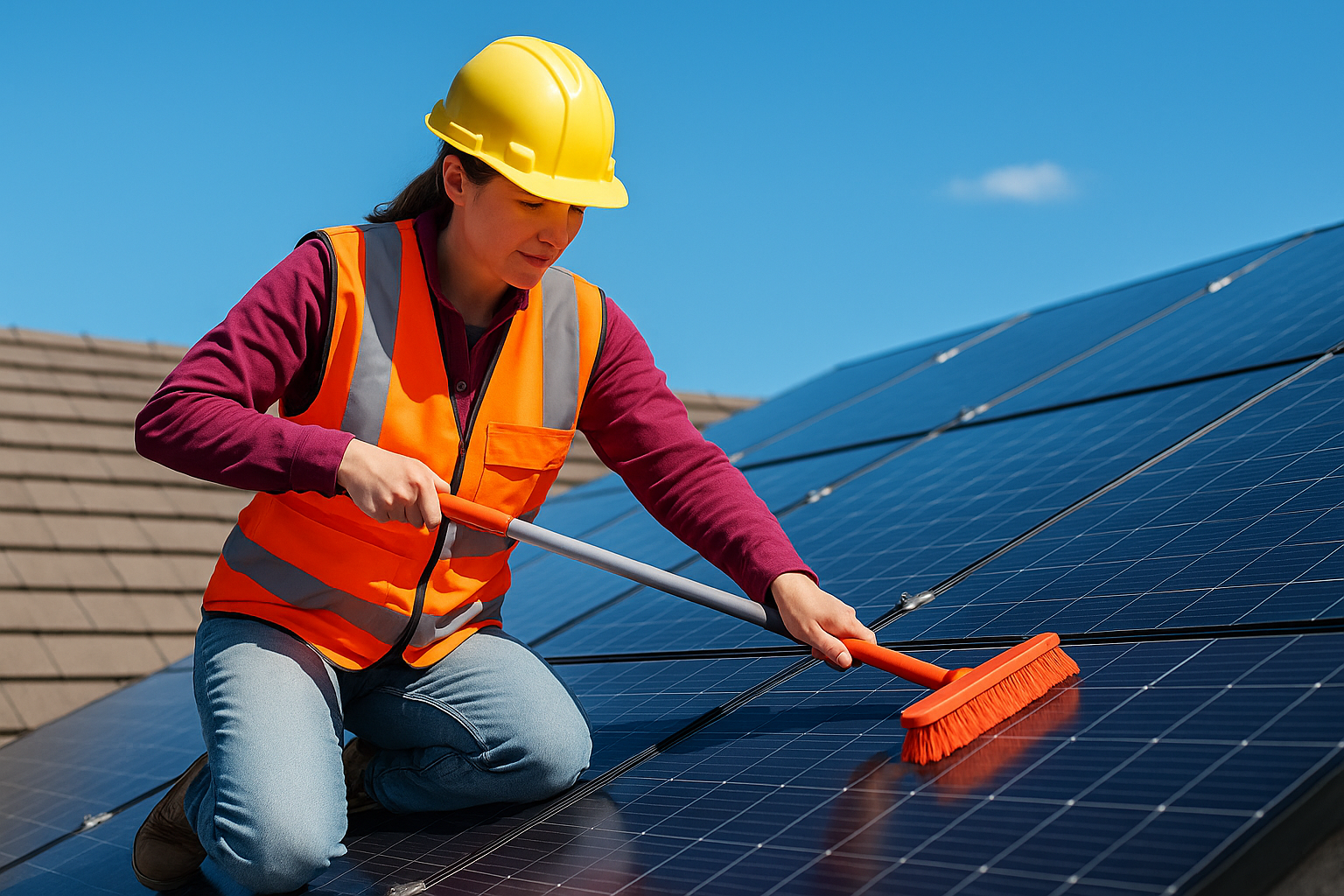
Traditionally, cleaning solar panels requires water, labor, contact-based robots, or expensive maintenance systems. But a recent scientific study proposes a remarkably simple and efficient solution:
using the downward airflow generated by drones to remove dust without physical contact and without water.
The Problem: Dust, Sand, and Energy Efficiency
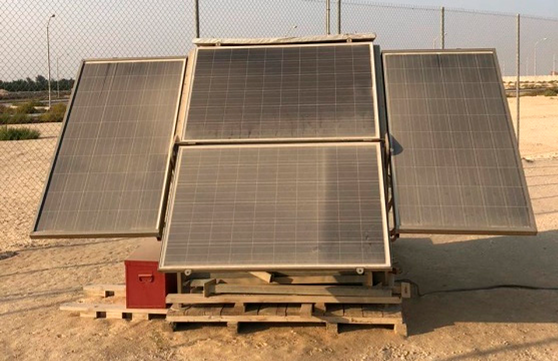
According to the study, progressive dust accumulation drastically reduces energy production:
- With just 20 cc of dust, power drops by 24%.
- At 50 cc, the reduction reaches 43%.
- At 100 cc, power output decreases by 65%.
For large solar farms with hundreds of thousands—or even millions—of panels, this becomes a massive technical and economic challenge.
Additionally:
- Manual cleaning is expensive, slow, and hazardous.
- Robotic cleaners typically require water and may scratch panel surfaces.
- Electrostatic methods require high voltage.
A more efficient, contact-free, and resource-saving method was urgently needed.
The Innovation: Cleaning Solar Panels Using Drone Airflow
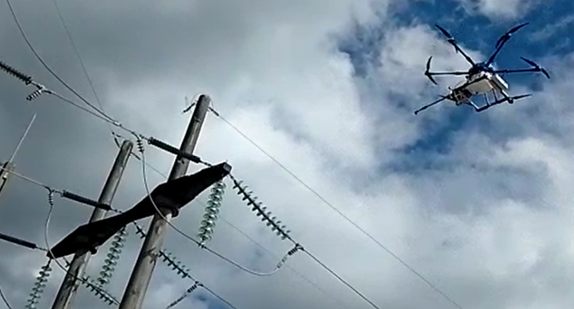
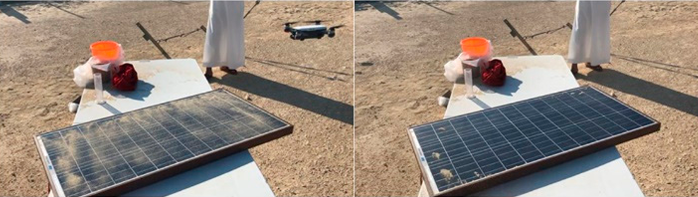
The study proposes using commercial drones—such as the DJI Inspire 1—to clean solar panels without touching them. The logic is straightforward:
The drone’s downward propeller thrust creates a strong air stream that blows dust off the panel surface.
No water.
No physical contact.
No heavy machinery.
The drone simply follows a predefined flight path to clean the panels with its own airflow.
How the Study Was Conducted
Researchers tested three drone flight paths:
- Horizontal
- Vertical
- Diagonal
And three dust levels:
- 20 cc
- 50 cc
- 100 cc
For each test, they measured:
- Power output before and after cleaning
- Amount of dust removed
- Cost and energy consumption of the drone cleaning process
Key Findings of the Study
1. Power Output Increased Significantly After Drone Cleaning
The drone flights produced large gains in power output:
With 50 cc of dust:
- Horizontal: +61.2%
- Vertical: +69.8%
- Diagonal: +68.0%
With 100 cc of dust:
- Horizontal: +69.4% → the best performer
- Diagonal: +57.6%
- Vertical: +23.7%
The pattern is clear:
The horizontal flight path consistently delivers the best and most stable performance.
2. Dust Removal Efficiency
Dust removal percentages align with energy recovery results:
| Flight Path | 20 cc | 50 cc | 100 cc |
|---|---|---|---|
| Horizontal | 78.6% | 74.6% | 78.0% |
| Diagonal | 68.5% | 78.4% | 58.5% |
| Vertical | 57.7% | 57.0% | 36.4% |
3. Ultra-Low Cleaning Cost
One of the most remarkable discoveries is the cost.
The estimated operating cost to clean one panel using a drone was:
– 0.00000812 SAR (horizontal path)
Yes — that’s essentially zero.
For one million panels, the cost would be:
– 8.12 SAR
(less than the price of a bottle of water in Saudi Arabia)
This is because drone flights use minimal energy and no water.
Why Drone Cleaning Is a Breakthrough
✔ Water-free
Critical for desert regions where water is costly and scarce.
✔ No contact with the surface
Avoids scratches or mechanical wear on panels.
✔ Fast cleaning
Seconds for a single panel; hours for thousands.
✔ Can be automated
Drones can be programmed to fly regular routes, especially after sandstorms.
✔ Massive cost savings
Far cheaper than manual or robotic methods.
Limitations Identified
Though highly promising, this method is not universal:
- Drone battery life limits continuous operation.
- Strong winds can destabilize the drone.
- Works best on dry, loose dust; does not replace deep cleaning when dust is sticky.
Even with these limitations, the benefits clearly outweigh the drawbacks.
Conclusion
The study demonstrates that drones can clean solar panels quickly, efficiently, and at near-zero cost, making them an extremely attractive option for large-scale solar farms—especially in desert climates.
The horizontal flight path proved to be the best in all scenarios, offering the greatest energy recovery and highest dust removal efficiency.
As drone technology rapidly advances, this approach is poised to become the new gold standard in solar farm maintenance—saving water, cutting operational costs, and boosting renewable energy production worldwide.
Acknowledgments and Credits
This blog article is entirely based on the scientific study:
“Cleaning of Photovoltaic Panels Utilizing the Downward Thrust of a Drone”,
published in Energies (2022) by
S. Rehman, M.A. Mohandes, A.E. Hussein, L.M. Alhems, and A. Al-Shaikhi.
We extend our appreciation to the authors for their rigorous research and for making their findings available through open access, enabling this analysis and dissemination in an accessible format.